Music Education – Classical Music (B.A.)
Bachelor of Arts
Shaping the classical music of tomorrow
Studying music in the Classical program in Osnabrück offers a comprehensive training that focuses on both artistic development and the foundations of music education. Students have the opportunity to develop their instrumental and vocal skills in lessons and to express themselves creatively in various contexts.
From the very first semester, they are actively involved in practice, whether through ensembles, orchestral projects or various concert and performance formats. This not only develops their artistic skills but also enables many of them to found their own ensembles and to take an active and successful part in cultural life.
Another important aspect of the program is music education. Here, classical priorities are set while innovative ways of teaching music are also explored. This prepares students to teach at music schools and similar institutions and to inspire the next generation with a love of music.
All in all, students are trained as so-called "Educating Artists" who can both work as artists and be actively involved in music education.
The program at a glance
The degree program at a glance
- Degree
Bachelor of Arts
- Start
Winter semester
- Requirement
See sections 'Application' and 'Qualifying exam'
- Standard period of study
8 semesters
- Language
German
- Type of study
Full-time undergraduate degree program
- Numerus Clausus
No
- Location
Osnabrück - Caprivi Campus
- Admission restriction
Yes
Career prospects
Educating Artists work as freelance musicians in their own ensembles or are engaged for projects and concerts. They work at music schools and comparable institutions or become self-employed.
The job market at public institutions has changed a great deal in recent years. There are now many music school positions that are well paid under collective agreements, where you can work successfully in music education and where a wide range of career paths open up.
By taking current social developments into account and by teaching well-founded skills in music education and the arts, the program offers up-to-date studies geared to the job market.
Our graduates need to be flexible and forward-looking and, as cultural professionals, actively shape and develop musical life in the years to come.
What our former students say
Antje Köss
Music Education – Classical Music (B.A.)

I really enjoyed my studies in Osnabrück. Because of the size of the university, contact between students and teachers was always very close. I am still grateful for this in my professional life today, as I can draw on a large network of musicians.
I particularly liked the focus on chamber music and pedagogy, as it prepared me perfectly for my job as a teacher at a music school. Thanks to the broad range of the program, I can also work in many different ways in my professional life. In addition to my own concerts in chamber music ensembles, this includes above all individual instrumental lessons and preparing young cellists for concerts and competitions, ensemble work, concert organization and involvement in school projects.
Richard Gonzalez
Music Education – Classical Music (B.A.)
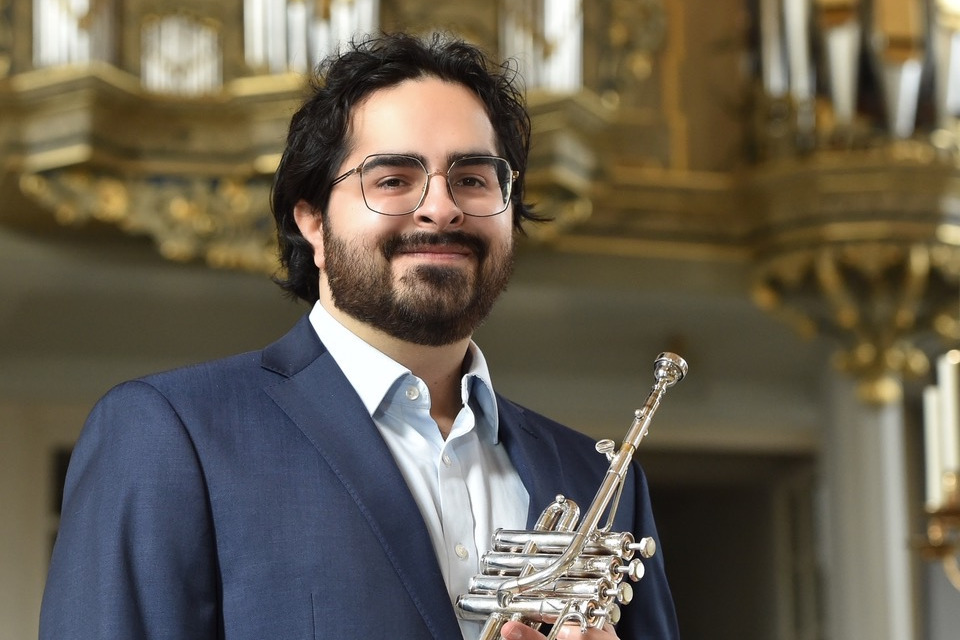
As an aspiring music school teacher, deciding to study at the Institute of Music at Osnabrück University of Applied Sciences was a "no-brainer" for me. The IfM offers students many opportunities to perform, gain teaching experience and get support for self-organized projects. A great advantage of studying at the IfM is its own music school, where students can sit in on lessons by experienced music school teachers and talk and work with them to improve their teaching skills alongside their studies. The professors are world-class, and the curriculum enables students to acquire extensive knowledge to become competent teachers while leaving enough free time to practice.
Negar Hashemi
Music Education – Classical Music (B.A.)
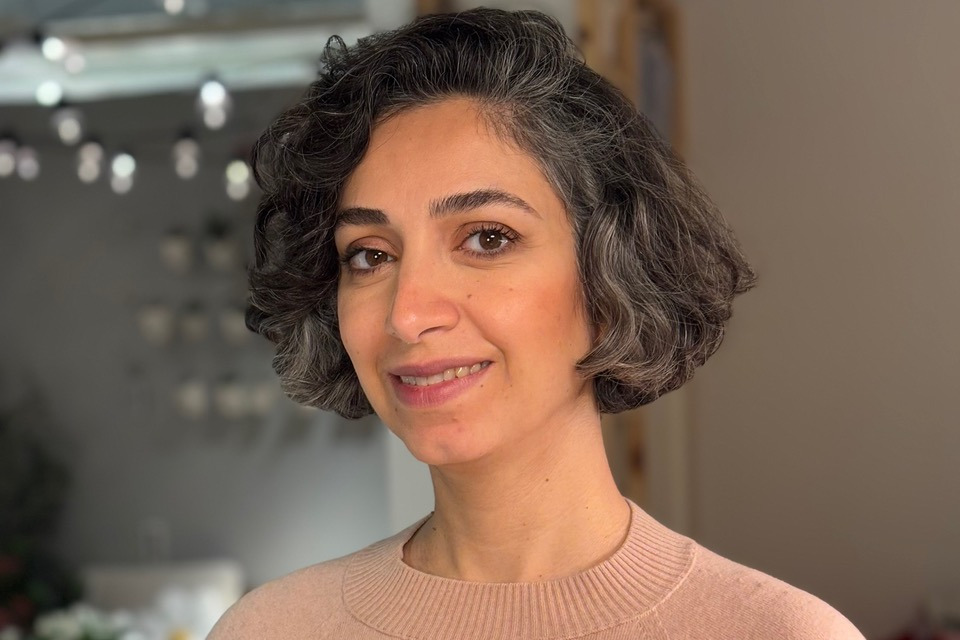
Studying instrumental pedagogy with a focus on piano at Osnabrück University of Applied Sciences was a great experience – artistically, pedagogically and personally. I was particularly impressed by the high artistic level, which always challenged and motivated me despite the pedagogical focus. The close connection between artistic and pedagogical training makes the program special. In addition to your own musical development, you learn sound didactic and methodological skills that can be put directly into practice. The supervised internships in particular were a valuable experience for me and make starting a career much easier. What also made studying so pleasant was the intensive support from the professors and the family atmosphere. You always feel supported and grow in a great community. Choosing Osnabrück as a place to study was an absolute stroke of luck for me!
Students get to know works from all eras and styles. They study these works and master them both technically and musically. Particular preferences for one style are taken into account without losing sight of the challenges of other eras.
In addition, the results of master classes and workshops feed into the artistic presentation.
Academic advising Classical – Instrumental
Prof. Bernhard Wesenick
Program coordinator
Office hours: Monday to Wednesday by appointment
Room: FA 0022
Phone +49 541 969 7265
b.wesenick@hs-osnabrueck.de
Classical Voice offers students excellent artistic vocal training and wide-ranging training in vocal pedagogy. Over the course of their studies, they develop their individual vocal skills in many contemporary ways, not only in terms of vocal technique and artistry but also in terms of style. With courses in chamber music and staged projects and performances, academic seminars and research, as well as theVocal Pedagogy Master Classes Osnabrückthey are thoroughly prepared for their future fields of work. At the IfM, interdisciplinary musical collaboration is a matter of course: from historically informed performance to contemporary music, students of Classical Voice try out and acquire their stylistic knowledge in close connection with the other programs (Musical, Pop, Jazz and EMP).
Academic advising Classical – Voice
Prof. Hayat Chaoui
h.chaoui@hs-osnabrueck.de
Regular opportunities to perform within the instrumental classes and at the IfM, as well as a wide range of event series at other attractive venues such as the Kunsthalle Dominikanerkirche, the Felix Nussbaum Haus, the Ruller Haus and many more, shape the artistic personality.
The opportunity to give frequent concerts builds confidence in public performance and helps students gain more and more stage presence. Master classes, chamber music courses and workshops round off the artistic training at the IfM.
The second focus puts music education skills in the foreground. This includes comprehensive self-reflection on didactic practice and the development of methodological skills for educational work in the wide-ranging fields of the future profession. The program is very practice-oriented and, through many courses on methodology and didactics as well as interesting cooperation projects, provides a first insight into the future field of work and the transfer of the knowledge gained in theory.
Several times a year, the IfM hostsmaster classes, workshops and guest lecturesin which internationally renowned artists and teachers work with the students. Topics include performance training, stage fright and practicing in flow.
Twice a year, interested IfM students meet renowned musicians and music educators at chamber music master classes: in addition to instrumental and vocal coaching, theSpring Academyand theEarly Autumn Academyoffer workshops in music pedagogy and music theory.
Since January 2020, the Classical Voice department has also presented theVocal Pedagogy Master Classes Osnabrück. The new series focuses on aspects of teaching and, connected with this, the educational background of the guest teachers. Star soprano Annette Dasch taught the first edition.
There are alsoexchange programswith other universities in Europe and beyond, which our students make extensive use of.
The Classical department maintains a wide range of collaborations.
Internationally, we maintain contacts with music universities and music institutions in Bolivia, Chile, France, Canada and Italy.
Locally, the Classical department maintains a network of cooperation partners that forms a practice-oriented didactic field of work and extends to concert organizers and music schools.
In the class music-making projects for strings, brass and woodwinds, choir, percussion and guitar, students gain teaching qualifications in the respective subjects under the guidance of teachers.
In music theory/ear training and composition, there are collaborations with the Musik- und Kunstschule der Stadt Osnabrück and with the Landesmusikakademie Niedersachsen as part of the music mentors project „Hauptsache Musik“. Future music educators are trained through teaching internships in group and individual lessons, supervised by experienced teachers of the respective subject.
For the Classical department, it is very important that this fulfills our educational mission of bringing demanding, broad-based music education into general schools.
In seminars and internships, students are introduced step by step to this exciting and demanding music education work. We are delighted by the great acceptance among our cooperation partners and the high registration numbers of school students, which show how important this work is. The projects and their results are presented at regular events.