Sustainability
Sustainability at Osnabrück University of Applied Sciences
As the largest university of applied sciences in Lower Saxony, Osnabrück University of Applied sciences is committed to taking responsibility for society and the environment. Guided by the principle 'Together for Tomorrow', we see sustainability as more than just a buzzword; it is a central pillar of our strategic direction. Through our constitution, we have made a clear commitment to social, ecological and economic sustainability across our five key areas of action: governance, teaching and learning, research, operations, and knowledge transfer. The university leverages its unique freedom as a foundation-funded institution and works closely with regional companies and institutions to help shape the transformative processes of our time.
Initiatives
The working group AKN (Arbeitskreis Nachhaltigkeit / Sustainability Working Group), brings together members from all status groups at Osnabrück University of Applied Sciences. All university members are welcome to join.
Within the AKN, students, lecturers and staff from all faculties collaborate to translate the University's guiding principle ‘Together for society’ into practice. The AKN provides a platform for discussing sustainability issues, as well as for initiating, coordinating and networking activities that foster more sustainable learning, teaching and working practices at the university. The overarching aim is to support the university in meeting its responsibilities with regard to sustainable development.
AKN meetings are open to the university community and are held regularly during the semester. In addition, project groups meet independently to address specific topics.
Further information can be found here.
Contact person

The student initiative NEO (Nachhaltiges Engagement Osnabrück / Sustainable Engagement Osnabrück) has been active since the summer semester of 2017. It provides a platform for students from all faculties and disciplines to discuss sustainable development in ecological, social, economic and cultural terms, to experiment with new ideas and to get involved in the university community and wider society. NEO collaborates with the General Students' Committee (AStA).
NEO aims to take responsibility and set an example. One of its goals is to establish a presence in the everyday university life and raise awareness of sustainability among all stakeholders. To this end, the students get involved in planning and carrying out projects of various scales. These include:
- DIY workshops, e.g. for cleaning and personal care products
- clothes swapping events
- flea markets
- film screenings, talks, information sessions
- clean-up walks
- NEO is also happy to support new ideas!
All students are warmly invited to get involved and can contact the NEO contact persons (see below)!
Contact persons
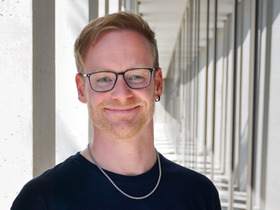
The bicycle repair workshop R2R (Ride2Repair) is located on the Westerberg Campus. Here, the General Students' Committee (AStA) has set up a simple and cost-effective service for Osnabrück students and university staff to repair their bikes and learn some useful skills.
Further informationen:
- more tips on sustainable mobility for students at Osnabrück University of Applied Sciences
- a leaflet about the various repair initiatives in Osnabrück
The group Scientists for Future Osnabrück is the Osnabrück regional group of Scientists for Future Germany. It comprises researchers and Master's students from Osnabrück University of Applied Sciences and Osnabrück University who were inspired by the statement issued on 12 March 2019: This statement confirms that the concerns of the Fridays for Future movement are justified. Drafted by scientists from Germany, Austria and Switzerland, it was signed by more than 26,800 scientists.
The Scientists for Future Osnabrück
- are an independent, non-partisan group of scientists dedicated to protecting the climate and biodiversity.
- advise the Fridays for Future and other climate protection initiatives in and around Osnabrück.
- inform interested members of the public about the challenges posed by climate change and the decline in biodiversity, as well as ways to counteract the unsustainable treatment of our planet and its resources.
To this end, the scientists are offering the following formats:
- a series of lectures entitled 'Climate and Biodiversity in Crisis: Pathways to a Sustainable Future', which includes guided tours and excursions (e.g. through Osnabrück's 'Green Fingers'),
- workshops on climate education for teachers and pupils,
- information stands during action days and project weeks,
- exhibitions and activities in cooperation with various partner organisations (see here).
Supporters (including students with a bachelor’s degree) are always very welcome!
Further information can be found on the group’s website or in the newsletter (to sign up, email osnabrueck@scientists4future.org).
Structures
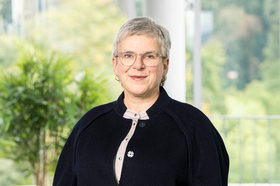
Vice President for Equal Opportunities and Sustainability
+49 541 969-7120
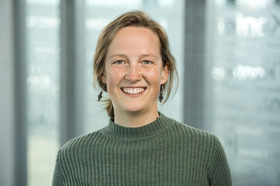
Lea Klöppel
Academic Assistant for Sustainability (to the Vice President)
+49 541 969-7170

The Senate Commission for Sustainability (KfN, Kommission für Nachhaltigkeit) is a newly established Senate commission at Osnabrück University of Applied Sciences which began working in the winter semester of 2025/26.
The commission discusses and evaluates measures for climate protection and adaptation, as well as the university's strategic planning and developments with regard to social, climate, and environmental compatibility. It advises the university on its sustainability guidelines and how to contribute to achieving the Sustainable Development Goals (SDGs).
The commission reports to the Senate annually and may propose strategies and projects aligned with sustainable development.
Contact persons
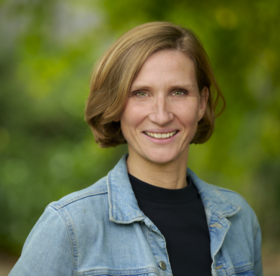
Prof. Dr. Melanie Speck
Socio-economics in the household and the workplace
+49 541-969 5090
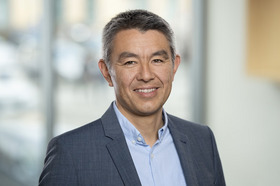
Prof. Dr. Johannes Hirata
Economics, particularly International Economics
+49 541-969 3313
At our university, the guiding principle of 'Together for society' is more than just an empty phrase. Through our teaching content and targeted research topics, as well as institutionally, we address societal challenges, particularly the issue of sustainability in all its facets.
Here at the Department for Social Engagement, we give all university members the opportunity to contribute their expertise within the university, for example by bringing project ideas to fruition.
Among other things, we provide:
- the ‘Social Engagement Funding Pool’
- the organisation of discussion events within the subject area (such as the university-wide ‘Together for Society’ block week or the Democracy Forum)
- support for student engagement (NEO, the Sustainability Working Group, various microprojects in the field of sustainability)
Contact Person
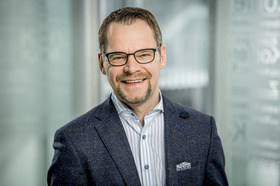
The Sustainability Unit of the General Students' Committee (AStA, Allgemeiner Studierendenausschuss) operates across all of the university's campuses (Caprivi, Haste, Lingen and Westerberg) as well as in the city of Osnabrück, raising awareness of sustainability. In doing so, the AStA focuses on the three dimensions of sustainability. As well as advocating for environmental protection, it undertakes various projects with a clear social and economic focus. This offers students the opportunity to engage with the various facets of sustainability and try their hand at them. Students can submit their own project ideas to the AStA Sustainability Representative via email or an online form.
The following initiatives are already in place:
- a swap shelf in the AStA garden on Westerberg
- regular Repair Cafés (in cooperation with RISE)
- the loan of cups and other tableware to reduce plastic consumption, e.g. for parties.
In addition, the AStA generally ensures that
- no plastic cutlery or crockery is used at AStA events,
- no excess posters are printed,
- limited quantities of the print semester planner are ordered.
The AStA Sustainability Department collaborates closely with organisations, project groups and committees, including the student initiative NEO ('Nachhaltiges Engagement Osnabrück', or Sustainable Engagement Osnabrück) and the AKN ('Arbeitskreis Nachhaltigkeit', Sustainability Working Group).
Contact Person
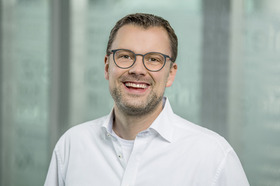
Malte Mensing
AStA representative for sustainability
Business psychology student
Networks
The DG HochN (Deutsche Gesellschaft für Nachhaltigkeit an Hochschulen e.V. / German Society for Sustainability at Higher Education Institutions) supports higher education institutions and individuals committed to sustainable development within the higher education system, who wish to contribute to achieving the Sustainable Development Goals through research and practical application.
The Society acts as a platform for the exchange of knowledge and expertise on sustainability in higher education, connecting change agents across organisational and status group boundaries.
The aim is to enable as many German higher education institutions as possible to learn from one another in the context of sustainability and to benefit mutually from each other’s experiences. The DG HochN network invites members of the higher education community, as well as individual departments and entire institutions, to commit to concrete measures for sustainable development within the higher education system.
The DG HochN enhances the visibility of the sustainable development at German universities and supports sustainability stakeholders through application-oriented, co-creative exchange. The DG HochN also cooperates with other national and international sustainability networks.
Osnabrück University of Applied Sciences has joined the DG HochN network as an institutional member in March 2026. All Osnabrück University of Applied Sciences members can therefore become DG HochN individual members free of charge; individual members have the opportunity to offer and participate in DG HochN hubs.
Information on the other participating universities can be found here. See here for upcoming events.

The network HochNiNa (Netzwerk für Nachhaltigkeit an niedersächsischen Hochschulen / Sustainability Network of Universities in Lower Saxony) was established in 2018 with the aim of promoting exchange and cooperation between individuals responsible for sustainability at universities in Lower Saxony. The network is intended to give them a collective voice to advance sustainability at these universities.
University sustainability encompasses not only operational issues such as energy saving, mobility and waste management, but also teaching, research, knowledge transfer and cooperations as well as the necessary structures and processes, and sustainability reporting.
In recent years, universities in Lower Saxony have set very different priorities and developed distinct approaches to 'sustainability and higher education' due to their differing structures and resources. The network aims to benefit from this diversity of expertise and ideas, providing a platform for discussion on specific issues. It also serves as a source of new inspiration and opportunities to reflect on one’s own work.
The network operates through several thematic working groups, supported by a coordination team. The current members of this team are Anna Krämer (University of Oldenburg), Katalin Kuse (University of Hildesheim) and Asja Mrotzek-Blöß (Clausthal University of Technology).
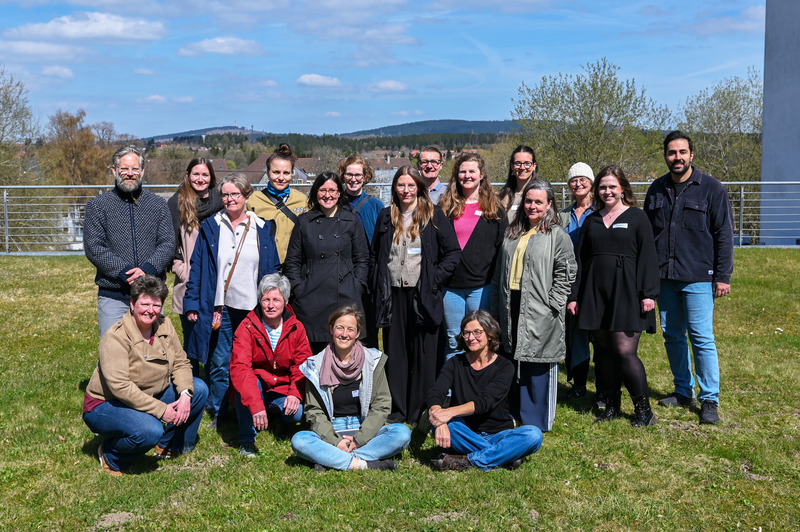
The universities participating in the network are currently
- Braunschweig University of Art
- Technische Universität Carolo-Wilhelmina zu Braunschweig
- Clausthal University of Technology
- University of Applied Sciences Emden/Leer
- Georg-August-University of Göttingen
- Hannover University of Applied Sciences
- Leibniz University Hannover
- Medizinische Hochschule Hannover
- University of Veterinary Medecine Hannover
- University of Hildesheim
- Jade University of Applied Sciences
- Leuphana University Lüneburg
- Carl von Ossietzky University of Oldenburg
- Osnabrück University of Applied Sciences
- Osnabrück University
- Ostfalia University of Applied Sciences
- University of Vechta.
The network is open to all higher education institutions in Lower Saxony.
Since August 2023, HochNiNa has coordinated the COUNTS project: Standardisation, Further Development and Communication of Greenhouse Gas Balances of Higher Education Institutions in Lower Saxony (Standardisierung, Weiterentwicklung und Kommunikation von Treibhausgasbilanzen niedersächsischer Hochschulen)
As part of this project, a common greenhouse gas (GHG) balancing framework is being developed for higher education institutions in Lower Saxony, taking into account the specific circumstances and requirements of these institutions. On this basis, a freely accessible, web-based open-source accounting tool is being developed. The aim of the tool is to standardise GHG accounting in accordance with the GHG Protocol Standard, based on the jointly developed methodology and quality standards.
The project is funded by the Lower Saxony Ministry for the Environment, Energy and Climate Protection with approximately 210,000 euros over three years. It is managed by the Carl von Ossietzky University of Oldenburg on behalf of the network.