PAPy
The research center
The Research Center in Detail
About the Research Center
Dancing, singing, and playing an instrument place high physical, functional, and psychological demands on performing artists. Intensive training and rehearsal periods, repetitive strain, and high demands on physical performance can lead to health problems and impair the long-term practice of the profession. Despite these specific demands, health care for performing artists has so far been inadequately researched from a scientific perspective.
This is where the Performing Arts Physiotherapy (PAPy) Research Center comes in. Its goal is to further develop physiotherapy research and care in the field of the performing arts and to establish it as an independent scientific subdiscipline. The focus is particularly on dancers, singers, and instrumentalists. Building on existing research projects, such as the DFG-funded PA.H|Lifetime.ai project, PAPy is expanding its current research focus to include other key areas of the performing arts.
By combining scientific research, clinical care, and academic teaching, an interdisciplinary research environment is created that enables new insights into the health, resilience, and performance capabilities of artists.
The research center investigates the health requirements and stress profiles of dancers, singers, and instrumentalists. A particular focus is on the interplay of physical, functional, psychosocial, and vocal demands that arise in the day-to-day professional lives of performing artists.
The research focuses in particular on:
- Physical and functional stress profiles in dance, singing, and instrumental performance
- Musculoskeletal complaints as well as functional and vocal limitations
- Fatigue, stress, and recovery processes
- Correlations between physical strain, performance capacity, and health complaints
- Individual adaptation processes to professional and artistic demands
- Opportunities for prevention and sustainable health promotion
Both short-term stress responses and long-term health developments are taken into account.
What sets the PAPy Research Center apart is its expansion of physical therapy research to encompass the entire field of the performing arts. In addition to instrumentalists, the center focuses in particular on dancers and singers. It integrates scientific research, clinical care, and teaching. PAPy helps bring a previously under-researched population more into the spotlight of health research.
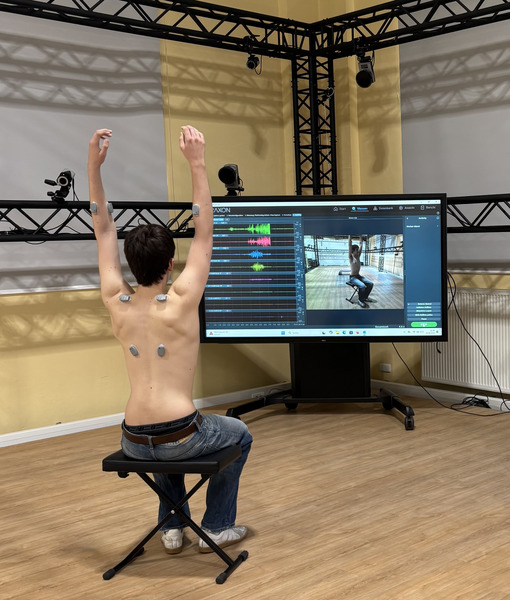
Modern laboratory and research facilities are available for scientific investigation. These include, in particular, various methods of instrumented motion analysis and electromyography. These methods enable the detailed recording and evaluation of movement patterns, muscle activity, and physical stress.
These technical methods are supplemented by physical therapy examinations and clinical diagnostics. By combining objective measurement data with clinical findings, individualized physical stress and health profiles can be created and scientifically evaluated.
Long-term data collection is of particular importance. It makes it possible to study changes in physical stress, fatigue, and recovery over extended periods and to derive evidence-based recommendations from these findings.
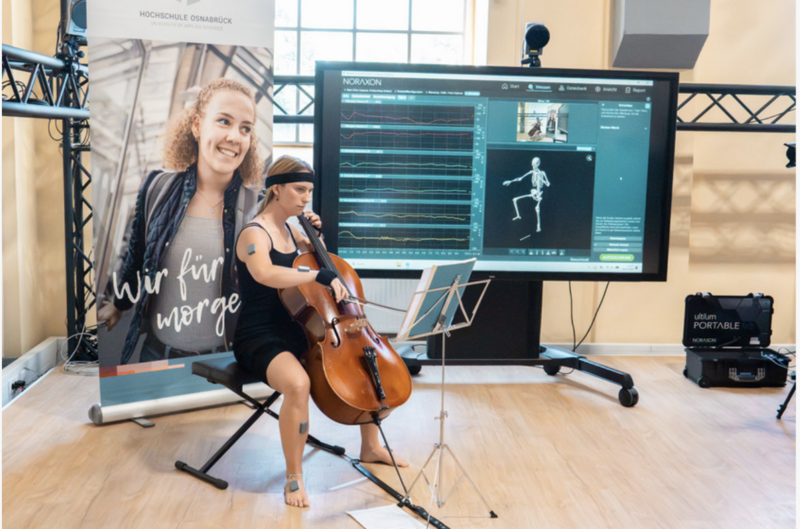
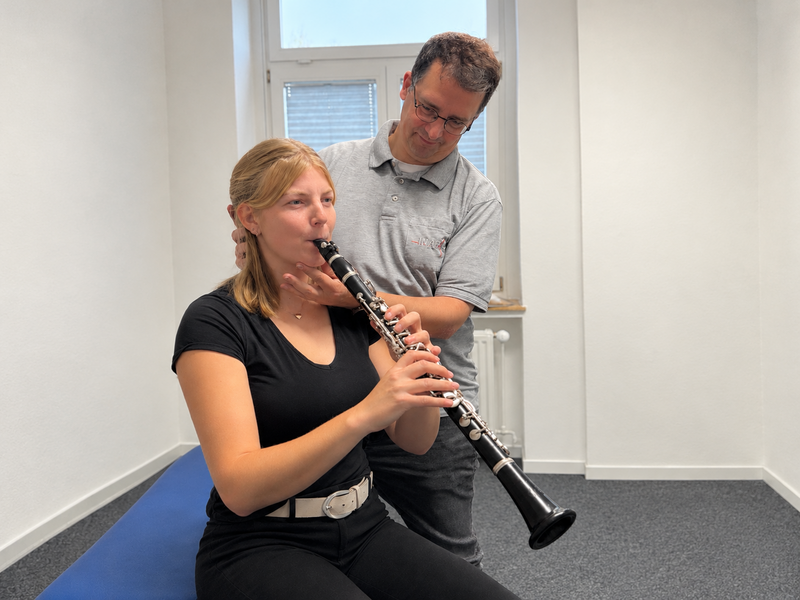
A key feature of PAPy is the close link between research and clinical practice. The scientific findings are intended to contribute directly to improving the physical therapy assessment, treatment, and prevention of health issues among performing artists.
In collaboration with the Institute for Applied Physical Therapy (INAPO), the project draws on many years of experience in clinical care. A physical therapy clinic has been in operation since 2007 and is continuously refined based on the latest research. The insights gained will be incorporated into target-group-specific screening, prevention, and treatment strategies.
In the long term, this is intended to support health-promoting conditions for training, rehearsals, and performances, reduce illness-related absences, and strengthen the long-term career sustainability of artists.
PAPy brings together various scientific disciplines and professional perspectives. In particular, it involves experts from physical therapy, medicine, epidemiology, musicology and dance studies, vocal performance, and health informatics.
This interdisciplinary collaboration allows for a holistic approach to the complex demands of the performing arts. The diverse areas of expertise enable the research to incorporate not only medical and physical therapy issues but also artistic, functional, and digital aspects.

The research center is closely linked to existing academic structures in the field of performing arts physical therapy. These include, in particular, the world’s first professorship in performing arts physical therapy at Osnabrück University of Applied Sciences, which was awarded to Prof. Dr. Bornwen Ackermann, as well as the world’s first master’s program in this field, which is currently still under development. The integration of research, clinical practice, and teaching facilitates the transfer of knowledge into academic education and the further development of the field.
The development of the new scientific subdiscipline of Performing Arts Physiotherapy is particularly innovative. Through modern motion analysis, electromyography, digital data collection, and the use of artificial intelligence, physical stress, fatigue processes, and performance are systematically examined. In addition, long-term data structures are being established that are intended to be integrated into a learning health system in the future. The insights gained from the collected data are directly incorporated into the further development of physical therapy treatments.
PAPy helps to establish a new field of scientific research and raise its international profile over the long term. Through interdisciplinary collaboration, the expansion of international partnerships, and the use of modern research infrastructures, new opportunities are emerging for scientific projects and further research initiatives.
The ENPPA association was founded as part of the PA.H|Lifetime.ai research project and serves as an important networking platform.
Other Research Projects
The PAPy Research Center is closely linked to other research projects that focus on the health, performance, and care of musicians. Some of these projects are being conducted in parallel; others have laid important groundwork or are exploring complementary research questions. Together, they form a strong research environment that pools knowledge, advances it, and translates it into practice.
PA.H|Lifetime.ai
The Health of Performing Artists – Development and Analysis of Risk Profiles and Predictive Models Using Artificial Intelligence
EMotionS
Movement, Pain, and Emotion
PhysioLabs - Forschung, Lehre und Transfer in der Physiotherapie
Department of Physical Therapy · Osnabrück University of Applied Sciences
Musician's Consulting Hours
Needs-Based Physical Therapy for Performing Artists
RefLabPerform
Reference Laboratory for the Assessment of Neuromusculoskeletal Disorders in Performing Artists
MusikPhysioKohort
Identification of Risk Factors Affecting Musicians' Health
MusikPhysio-partial project of ROSE
Part of the research project ROSE - The Learning Health System in the Osnabrück-Emsland Region
MusikPhysioAnalysis
Motion Analysis of Pathological Movement Patterns in Musicians with and without Music-Related Disorders