SPYN
- a hybrid wellbeing brand for children
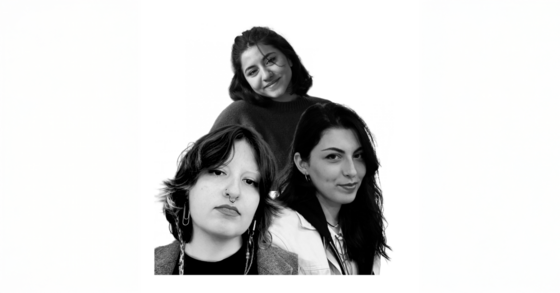
Project members:
Efsa Belemir Şen
Hilal Çalışkan
Teoman D. Güneş
Degree Program/Department:
Design Entrepreneurship (M.A.)
The Idea:
SPYN helps children develop a healthy sense of their bodies and greater awareness of their posture through play. Interactive elements, empathetic guidance, and gamification make well-being a tangible, child-friendly experience.
Who are you & what is your idea (team name, names of individuals, and the idea)?
We are SPYN Team: Belemir, Teo and Hilal. We are developing a phygital product that helps children (primarily aged 8–12) build healthier posture habits through gentle, gamified interventions.
How much funding (€) did you use, and for what (please state briefly)?
So far, we used a total of €2,409.10 out of our €6,200 budget. The funding was primarily used for developing and producing the first functional prototype of SPYN. This included sensors and electronic components such as IMU sensors, batteries, wires, protoboards, push buttons, and measuring equipment. We also purchased prototype materials, including 3D-printing filaments and tools, silicone, mould-making supplies, colour pastes, adjustable neck lanyards, and paint. In addition, part of the funding supported local data-storage infrastructure as well as communication materials, including a roll-up banner and flyers for market research and project presentation.
What was originally planned – and what actually happened over the six months?
We initially planned a wider scope of product development process that would already include early user testing. However, as the project progressed, it became clear that technical development required more time than expected. This was particularly due to the challenge of combining a comfortable wearable form with functional sensor technology and a future digital interaction. We therefore adjusted the project scope and focused on establishing a strong technical and design foundation. This allowed us to make meaningful progress while balancing the project with university responsibilities and other commitments. The result is an initial prototype that provides a solid basis for the next development stage.
What have you learned (professionally and personally)?
Professionally, we gained practical experience in hardware prototyping, electronics, material selection, 3D printing, and the iterative development of a physical-digital product. We also learned how important it is to validate technical assumptions early and to allow enough time for testing and refinement. Personally, the project strengthened our ability to work collaboratively under changing conditions. We learned to set more realistic milestones, communicate openly about challenges, and adapt our plans without losing sight of the overall vision.
What are the next steps for your idea—or is the idea even going to be taken any further?
We would like to continue developing SPYN. Our immediate priority is to complete the MVP and further improve the interaction between the wearable and the app. We also plan to seek additional technical support, especially in engineering and embedded systems, to strengthen the next development phase. Once the prototype is sufficiently reliable and the relevant permissions are in place, we aim to begin structured testing with our target group. The long-term goal is to create a practical, motivating, and child-friendly tool that supports healthier posture habits in everyday life.
Why would you recommend that others apply for KickStart?
KickStart gave us the opportunity to take an early idea seriously and turn it into a tangible prototype. Without this support, it would have been very difficult to access the sensors, materials, and technical resources needed for this stage of development. It encouraged us to define concrete goals, test our assumptions, and make progress even when the development process turned out to be more complex and slow than expected. We are very grateful for this opportunity.
Why would you recommend that others make use of the support services offered by RISE?
RISE’s support was valuable both financially and organisationally. RISE provided us with a motivating framework for developing an early-stage idea and helped us approach the project in a more structured and professional way. For teams working on complex or interdisciplinary ideas, support services such as those offered by RISE can make a meaningful difference. They provide encouragement, access to resources, opportunities for feedback, and a supportive environment in which ideas can develop into real projects.